How does your WordPress security relate to information security standards such as ISO 27001, the BIO or NEN 7510? Let’s clear up one misunderstanding first: WordPress does not suddenly make you compliant, because compliance is not a switch you flip. But if your organization falls under such a standard, your website is often a concrete part of it. After all, it is a place where data comes in and where your security has to be demonstrable. In this blog you will read which standards we are talking about, which standard applies to which type of organization (rarely does a single organization need them all), why compliance always has two sides, the technical side of your site and your hosting, how to speed up your preparation with AI, and how we approach it at JKC. One boundary up front: we largely leave the GDPR aside here. That is about privacy and personal data, a neighboring but different discipline from information security.
Is your WordPress security enough for information security?
WordPress has an unfair reputation for being insecure. The truth: WordPress security is no more and no less a matter of the system than it is on other platforms, it depends on how you set it up and manage it. With the right technology, processes and hosting, a WordPress site is perfectly suited to strict information security standards. Important to understand: a standard like ISO 27001 covers your entire organization, not just your website. So your website alone will never make you compliant. But the other way around, the site often is one of the components that falls within the scope of the standard, and therefore has to be demonstrably in order. Compliance is not a switch you flip, but a way of working that you set up and keep up demonstrably.
What weak WordPress security costs you
Information security sounds abstract, but the risks land on your own website. Suppose a large client asks you to sign a security statement or to pass a supplier audit, and you cannot demonstrate that your site is in order. That assignment then falls apart over a single checkbox. Or you lose a healthcare or government tender because you cannot substantiate the required standard. Those are the direct costs of weak WordPress security: lost revenue and reputational damage. On top of that comes the privacy side: if you process personal data through a contact form, newsletter or webshop, the GDPR also applies, with its own risk of a data breach and a fine from the Dutch Data Protection Authority (Autoriteit Persoonsgegevens). Related rules affect your site directly too, such as the European Accessibility Act. And it is not only an issue for large organizations: these requirements apply to freelancers and small businesses too as soon as you process data online. Good WordPress security is not a luxury, then, but protection for your revenue and your reputation.
Which standards are we talking about?
The core of this blog revolves around three information security standards. We place the GDPR alongside them separately, because it is about privacy rather than information security:
| Standard | About | For whom |
|---|---|---|
| ISO 27001 | International standard for information security | Anyone who wants demonstrable security (often corporate) |
| BIO | Baseline Informatiebeveiliging Overheid, the Dutch government baseline (at ISO 27001 level) | Government bodies and anyone working for the government |
| NEN 7510 | Information security in healthcare (NEN) | Healthcare organizations and their suppliers |
| GDPR (privacy, not information security) | Protection of personal data (Autoriteit Persoonsgegevens) | Every organization that handles personal data |
Important: rarely does a single organization need all of these standards at once. Which one applies to you depends on your sector and your role, and usually it is exactly one. A healthcare supplier looks at NEN 7510, a government supplier at the BIO, a corporate at ISO 27001. The GDPR is the exception that affects almost everyone, but it stands on its own: it is privacy legislation, not an information security standard.
Which standard affects whom? How to know what to watch for
Not every standard applies to every organization, and usually there is exactly one information security standard that affects you. What you need to watch for in your WordPress security depends on your sector and your role. If you recognize yourself in one of these situations, you immediately know which standard applies to you:
- Marketing or communications lead at a larger organization (healthcare, medtech, corporate). You have to build internal support with management, IT and sometimes QA or legal. In healthcare that is NEN 7510, in a corporate environment often ISO 27001. What matters to you: being able to show that the supplier can handle it, so that you do not run into trouble internally.
- Growing entrepreneur whose large client suddenly sets requirements. A client asks for an integration, a portal or a security statement. That is where ISO 27001 comes in. What matters to you: not losing the assignment over a checkbox you cannot tick.
- Government body or government supplier. Then the BIO applies, which in practice sits at ISO 27001 level.
- Any organization with a contact form or accounts. As soon as you process personal data, the GDPR applies as well. Note: that is privacy, not information security, a separate check that runs alongside your information security standard.
The common thread: information security is rarely an abstract requirement, but something a specific person has to be able to defend internally or with a client. Once you know which standard applies to you, you also know which conversation to have with your web developer and your hosting provider.
Compliance always has two sides: technology and hosting
This is the core that often gets forgotten. Compliance for a website is always the sum of two things. On one side the technology of the site itself: who may access which data, how long you keep data, how you log access, and how you prevent data breaches. On the other side the infrastructure and hosting: does your site run in an environment with the right certifications, and do those parties have demonstrable procedures? You can get the technology perfectly right, but on hosting without certification you still are not compliant. And the other way around just as much.
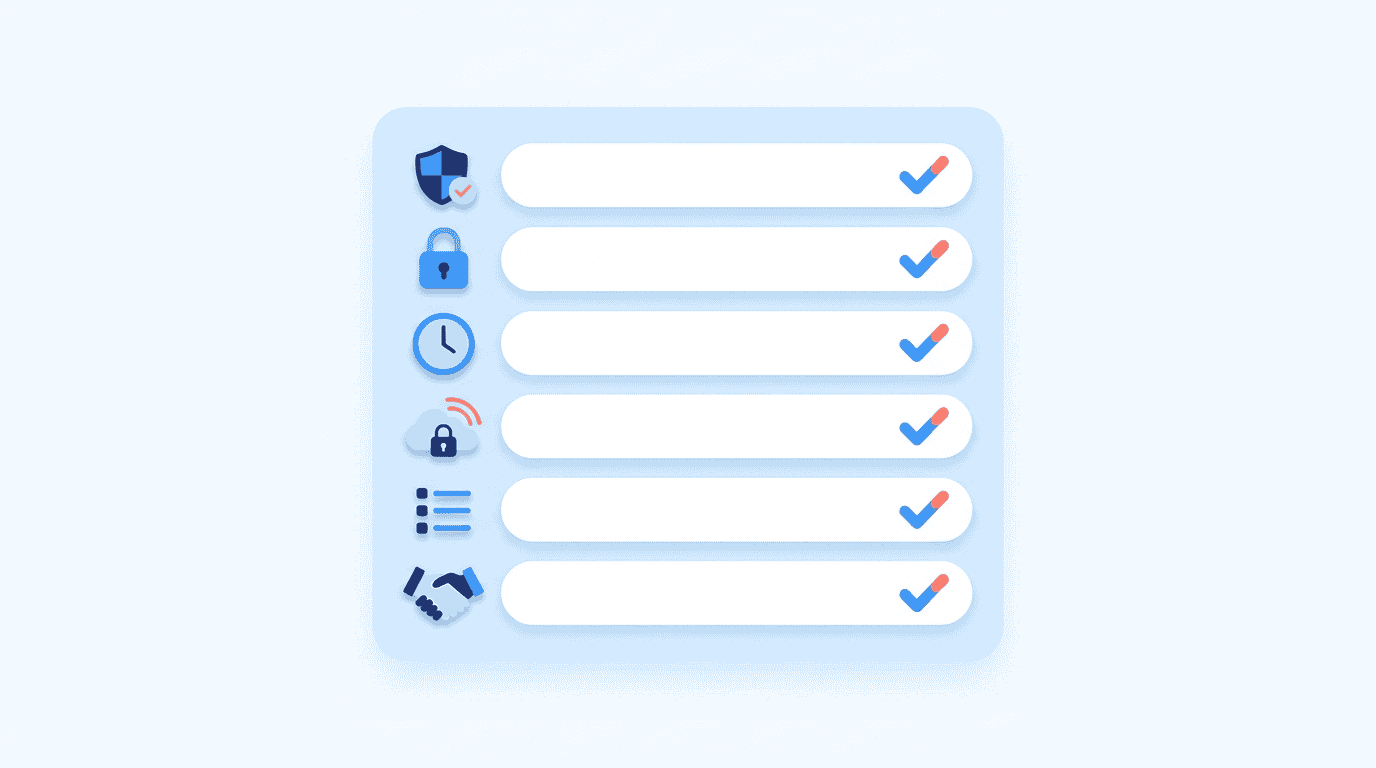
WordPress security: what you arrange at the technical level
- Least privilege: not everyone needs to be an administrator.
- Strong authentication: two-factor authentication for administrators, for example.
- Retention policy: record how long you keep form and customer data and when you clean it up.
- Encryption and updates: HTTPS everywhere, and keep software (core, plugins, theme) up to date.
- Logging: record who did what and when, so you can demonstrate it.
- Agreements: data processing agreements and a correct cookie and consent policy.
What you can expect from your hosting provider
Ask your hosting provider specifically about: their certifications (ISO 27001, for example), how often they make backups, how they respond to incidents, where the servers are located, and who has access. A serious provider backs that up with documents. If your healthcare or government site runs in an environment that cannot demonstrate this, that is a risk separate from your own technology.
Prepare your information security with AI: prompts you can use right away
AI will not take information security off your hands, but it does help you sharpen your preparation: taking inventory, asking the right questions and spotting gaps. You can copy these prompts and fill in the parts between the brackets:
- Mapping your data: “I have a WordPress site with these components: [contact form, quote form, accounts, newsletter, webshop, …]. Create an overview of which data each component collects, where that data ends up, and which of it is sensitive.”
- Question list for your hosting provider: “Draw up a list of specific questions I should ask my hosting provider to test whether they meet [ISO 27001 / NEN 7510], covering certifications, backups, incident response, data location and access.”
- Setting up a retention policy: “Draft a retention policy for these types of data: [form submissions, accounts, newsletter]. For each type, give a common retention period and when cleaning up makes sense, so that I can align it with my own legal requirements.”
- Spotting gaps: “These are the security measures I currently take: [paste list]. Compare them with the focus areas of [the standard] and name where I still have gaps and which questions I should ask my web developer.”
Important: use the results as preparation, not as a final verdict. In the end, information security is human work: have your approach reviewed by your web developer, your hosting provider and, where needed, a security expert or auditor. AI helps you have the right conversation, but it does not sign anything.
The master prompt: your preparation in one go
Would you rather have a structured preparation in one go instead of separate prompts? Copy the prompt below into your AI tool (ChatGPT, Claude or another one), fill in your situation, and you get a preparation document that you can work through with your web developer, hosting provider and possibly an auditor.
You are an information security advisor. Help me prepare my WordPress site
for an information security standard. You do not give a final verdict,
but a preparation that I will have reviewed.

My organization: [sector + number of employees]
The standard that applies to me: [ISO 27001 / BIO / NEN 7510, and/or GDPR for privacy]
Components on my site that collect data: [contact form, accounts, newsletter, webshop, ...]
My current measures: [paste what you do now, or 'I don't know']

Deliver:
1. A data inventory: for each component, which data it collects,
   where that data ends up and what is sensitive.
2. A draft retention policy per type of data, with a common period (to be aligned
   with my own legal requirements).
3. A question list for my hosting provider (certifications, backups, incident response,
   data location, access).
4. A gap analysis: which measures are missing compared to the standard, and which questions I
   should ask my web developer.
5. A short checklist with priorities (now / soon / later).

First ask up to 3 clarifying questions if something is missing.
Again: this is preparation, not a final verdict. That also fits how we look at AI (people steer, AI accelerates): you can read more about that in our vision on AI. The outcome sharpens your conversation with your web developer, hosting provider and auditor, but the signature remains human work.
A useful detail: an AI integration can check your entire WordPress site in one go for things like missing measures, outdated plugins or forms without the right settings, instead of page by page. You can read how to connect AI to your site safely in WordPress management in 2026: put AI to work.
How JKC approaches WordPress security
At JKC we commit to the BIO. In practice that is equivalent to the level of ISO 27001, and we are on our way to obtaining that ISO 27001 certification ourselves as well. In concrete terms that means: we set up sites with least privilege, a well thought out retention policy and logging, and we choose hosting that can demonstrate the right certifications and procedures. That way information security is demonstrably built into the technology and the infrastructure, not into a promise made after the fact.
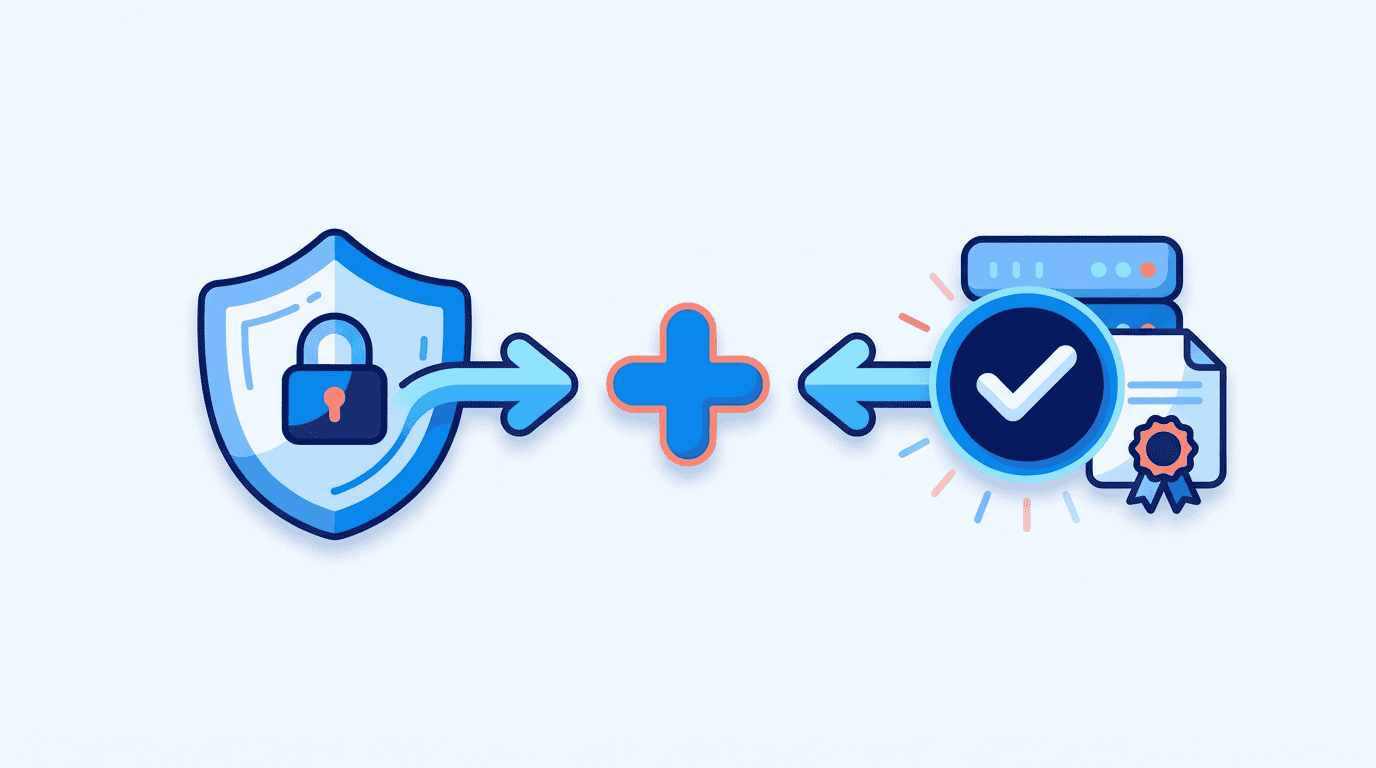
Compliance is never just your website or just your hosting. It is the sum of both, recorded demonstrably. If one of the two is missing, the picture does not add up.
Frequently asked questions about WordPress and information security
Which standard applies to my organization?
Usually exactly one, depending on your sector and your role. Healthcare organizations and their suppliers fall under NEN 7510, government bodies and their suppliers under the BIO, and corporate environments often choose ISO 27001 to make security demonstrable. Rarely does a single organization need them all. The GDPR stands apart from that: it applies to every organization that processes personal data, however small you are, but it is privacy legislation and not an information security standard. So in practice you often have one information security standard that fits your sector, plus the GDPR as a privacy baseline alongside it.
What is the difference between information security and the GDPR?
Information security (ISO 27001, BIO, NEN 7510) is about protecting information in a broad sense: controlled access, logging, retention policy and certified infrastructure, so that data does not leak, change or become unavailable. The GDPR is specifically about privacy: handling people’s personal data lawfully and carefully. They overlap, because good security helps you get your privacy in order, but they are two separate disciplines with their own requirements. For your WordPress site that means: you arrange the information security (technology plus hosting) and, if you process personal data, the privacy side separately (data processing agreements, consent, retention periods). This blog focuses on the first.
Is WordPress secure enough for healthcare (NEN 7510)?
Yes, provided it is set up properly. WordPress is not inherently less secure than other systems; it depends on how you set it up and manage it. NEN 7510 calls for controlled access (least privilege, strong authentication), logging that lets you demonstrate who did what and when, a well thought out retention policy, and hosting that supports this with certifications. With that setup, a WordPress site is a perfectly good component within the standard. The key is that you record it demonstrably, not that you choose a different CMS.
What is the difference between the BIO and ISO 27001?
ISO 27001 is the international standard for information security, aimed at setting up and maintaining a management system for information security. The BIO (Baseline Informatiebeveiliging Overheid) is the Dutch government baseline that is based on it and closely matches it in practice. Anyone who follows the BIO is effectively working at ISO 27001 level. For a website both mean the same things: controlled access, logging, retention policy and certified hosting.
Does a WordPress site make me compliant automatically?
No. An information security standard such as ISO 27001, the BIO or NEN 7510 covers your entire organization, its processes, people, technology and suppliers, not just your website. So your site alone will never make you compliant. But if your organization falls under such a standard, the website often is a concrete component within the scope: it is a place where data comes in and where your security has to be demonstrably in order. So you arrange the website as part of a larger whole, not as the whole story.
Does information security come down to my website or my hosting?
Both, and that is the core that often gets forgotten. The technology of your site determines who may access which data, how long you keep data, how you log access and how you prevent data breaches. Your hosting determines the underlying security: certifications, backups, incident response and where the servers are located. You can get your site technology perfectly right, but on hosting without certification you still are not compliant, and the other way around just as much. Information security is the sum of both, recorded demonstrably.
Want to know whether your site is ready for information security?
Would you like to know whether your WordPress site is ready for information security, whether that is ISO 27001, the BIO or NEN 7510, in both technology and hosting? Take the Growth Check: free, 30 minutes and without obligation. We show you where you stand and what is still needed.
Rather hand it off? See how we help with WordPress maintenance and support.
More articles
- Google AI Mode: what it means for you 20 October 2026
- Optimise your webshop for Q4 8 October 2026
- WordPress 7: what is new and what to check 29 September 2026