

Tip 1: define the goal and the audience of your website
Start by working out exactly what you want to achieve with your website and who you want to reach. Do you want to sell products? Do you want to offer visitors more information? Or mainly improve communication with your existing customers? The goal and the audience of your site both play a role in finding the right keywords. So make sure you have a clear picture of them before you dive into keywords. There are several types of search intent.
- Buying The visitor’s goal or intention is to actually purchase a product or service. In that case you use transactional keywords such as ‘buy black shoes size 39’. Play into that by offering your products right away on a landing page, so the visitor can buy in one click.
- Knowledge Website visitors sometimes look for extra information about a particular topic, product or service. Think of ‘cold symptoms’. It is smart to write something like a blog post on your website around such informational keywords within your industry. That way visitors reach your site through that blog post.
- Navigation Consumers use navigational keywords to get somewhere online. For example, they type ‘Instagram’ or ‘Facebook’ to end up on that site. When they type in your company name, they should find (one of the pages of) your website.
Tip 2: focus on long tail keywords
Say you sell swimming pools and you want your website to bring people water fun. You check the keyword ‘buy swimming pool’ in a tool. That term is searched more than 20,000 times a month. Check! Your pools will fly off the shelves. But that is not how it works. Because the volume is so high, competition for this keyword is brutal. The odds of you reaching the first page of Google are essentially zero. Leave short tail keywords alone: terms with high volume and heavy competition. Focus on so called long tail keywords instead: search terms made up of several words. Think of ‘buy round swimming pool’ or ‘buy inflatable swimming pool’. That way the user has a clearer idea of what they are looking for, which makes it far more likely they actually drop a pool into their shopping cart. Long tail keywords are the rule rather than the exception. The Search Demand Curve from SeoMoz and Experian shows that well over 70% of all searches consist of long tail keywords. Next, make sure your long tail keyword appears on your website. Work it into titles, body copy and your meta titles and descriptions. But be careful: do not overdo it. We will explain more about that shortly.
Tip 3: take a look at the competition
Take a peek behind the scenes at your competitors’ SEO. Tools let you examine a rival’s website closely and find out which keywords they rank for. You can draw inspiration from that for your own keyword research. On top of that, you learn which keywords are highly competitive and where you should look for other keywords instead. Otherwise it takes a lot of time and effort to score well on that particular keyword.
Tip 4: bring in tools
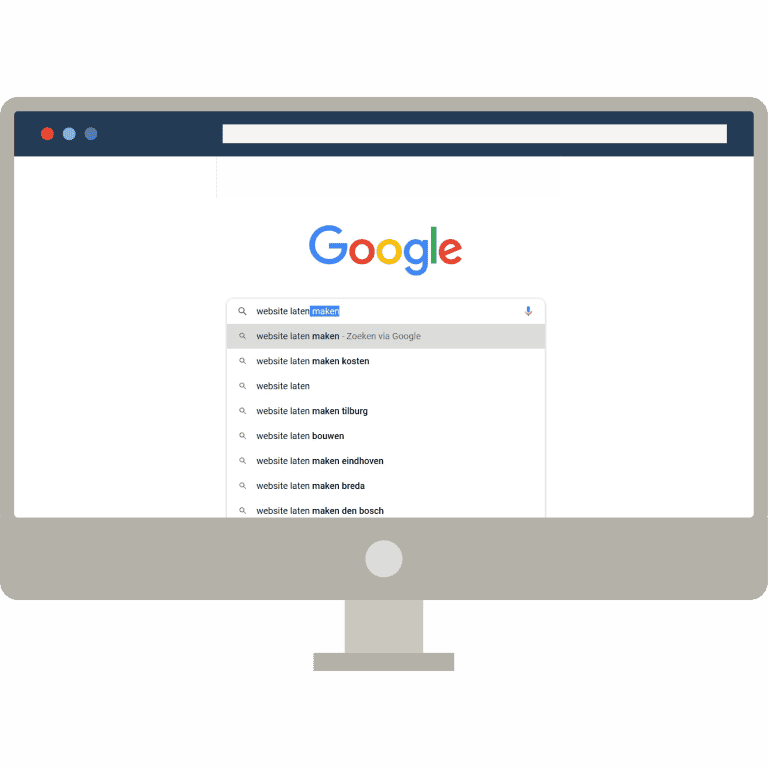
Google alone gets you a long way toward finding the right keywords. When you type in a keyword, the search engine already suggests a string of related terms. But to find out the exact search volume and competition for keywords, it is smart to use a tool. Think of Google Ads, Ubersuggest or SERanking. These tools also let you monitor how your online visibility grows with your keywords. Some of them are free to use, others cost money. But strong keywords are essential to how findable your website is. That makes investing in one of these tools a good move.
Tip 5: do not stuff keywords
Do you have a list of strong keywords on paper? Then it is time to work them into your web copy. By repeating them as often as possible. Wrong. That is not how it works. If you repeat the keyword in every sentence, Google will quickly catch on to your intentions. And the search engine will punish you by banishing your website to page fifty. Use the keyword regularly in your headings, body copy and alt tags, but do not overdo it.
Leave finding those keywords to us
Do you not feel at home in the world of keywords and search engines? We are happy to take that job off your hands. Bring us in for thorough keyword research. Is your entire website due for a refresh? We handle the keyword strategy and build it into your brand new website. And tips on what definitely not to do with your SEO? You can read those here.
Rather hand it off? See how we help with SEO and findability in Google and AI.
More articles
- 9 tips for more conversions on your online job postings 11 October 2022
- Content for your website: 5 tips for better online results 13 December 2022
- 7 benefits of a WooCommerce online store 23 March 2023