
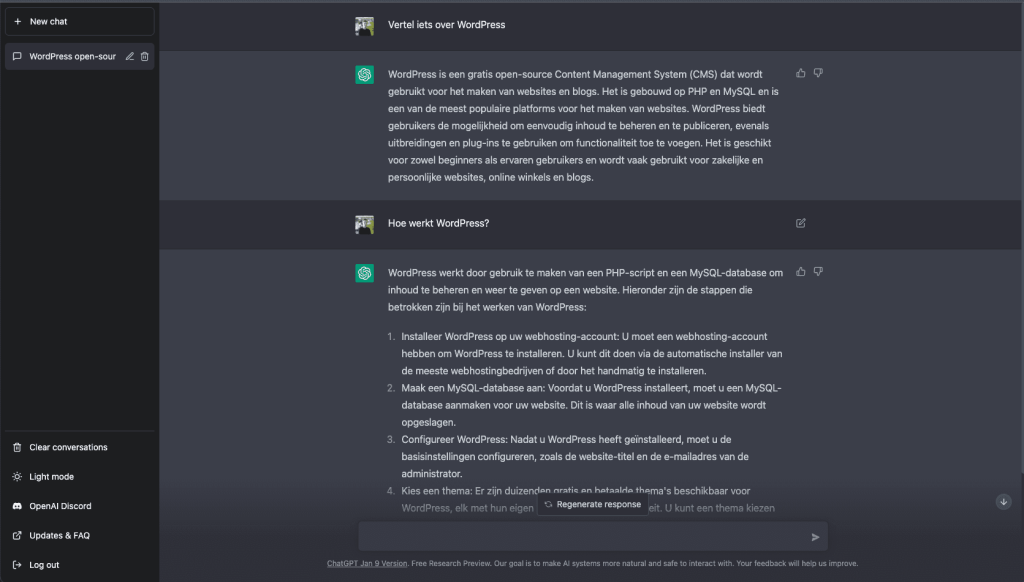
You have probably seen it all over social media lately: the brand new ChatGPT. Ready-made copy in a matter of seconds. ChatGPT lets you generate text, among other things, in no time at all. But are there also pitfalls to this tool when you use it for your website (and its SEO copy)? We take a closer look at the AI.
What is ChatGPT?
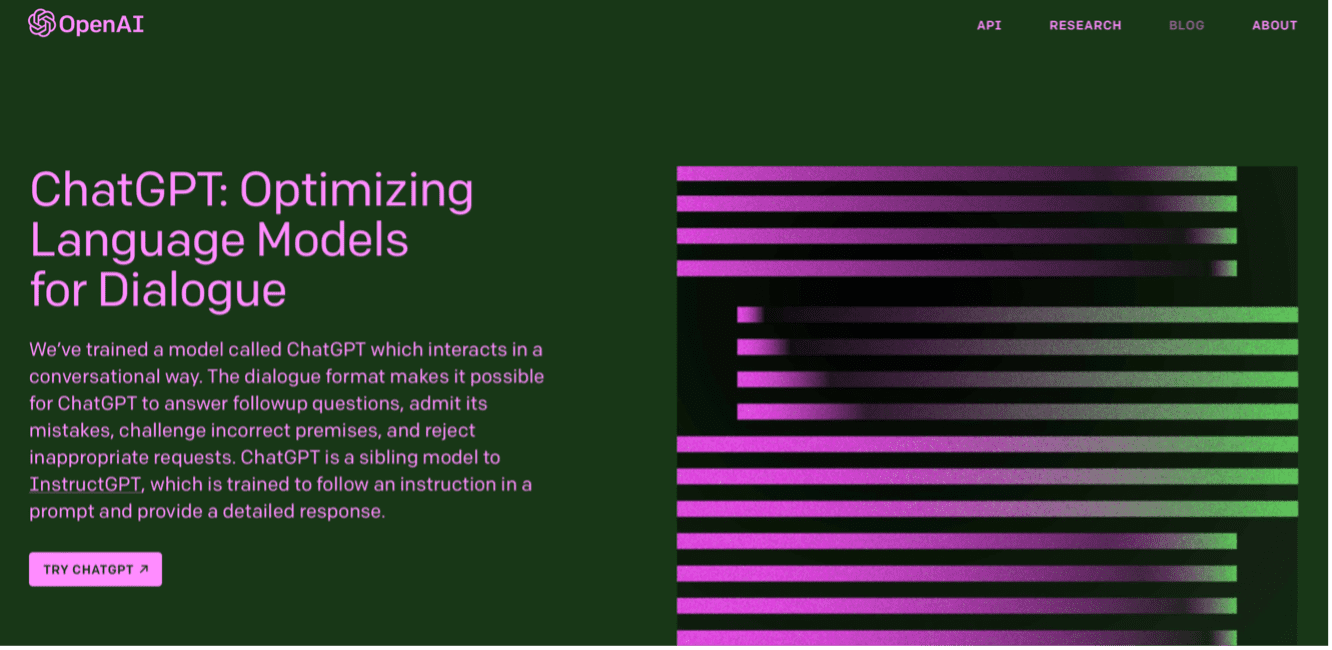
ChatGPT is an AI tool that uses the GPT (Generative Pre-training Transformer) model. With this artificial intelligence you create content that is almost indistinguishable from text written by people. The tool was built by OpenAI, a research institute founded by well-known tech entrepreneurs such as Sam Altman and Elon Musk.
ChatGPT is still free for now, but it may become a paid service in the future.
You can use the tool for all kinds of content: blogs, papers, stories, songs, simpler explanations of complex matters, and so on. Sounds like an ideal addition to the content on your website. In this blog we explain how you can use ChatGPT for the SEO copy on your site and what the pitfalls of the AI are.
How do you use ChatGPT for your website?
Natural sounding copy, fast
The tool produces a wall of text in no time. Copy that sounds natural and is written in a human way of communicating. Instead of struggling to find topics and write content yourself, you let the AI do it.
Relevant, high-quality content
The AI can, for example, put together articles or blog posts with high-quality, relevant content. Sharing content that matters to your audience benefits your findability and visibility in the search engines.
ChatGPT writes more than just text. The tool also puts together code, for instance. So if you are handy with programming, you can give your website a quick and easy upgrade.
No plagiarism
ChatGPT does not plagiarize. The tool puts together original text of its own that does not exist yet.
Getting inspiration
You do not have to use the AI to write entire texts. You can also use ChatGPT to get inspiration. Think of ideas for topics, article structures, concepts for blog titles, extra angles for articles, and so on. Ask the tool and it answers.
What are the pitfalls of ChatGPT?
Stay critical about the SEO
You can train ChatGPT on the search intent behind keywords by feeding it large amounts of text about the specific topic. That way the model learns which words and phrases often appear in connection with the subject. You can also literally ask the tool for something like a list of long-tail keywords. Even so, you always have to check for yourself whether your keywords are used properly in the text (in the headings and body copy, for example).
It does not know every subject
The AI does not have knowledge of every subject, so it cannot answer every question. With current events in particular, the tool sometimes cannot retrieve any information. In that case you will still have to get down to writing yourself.
The right tone of voice for your audience?
You write copy for your audience. You can give the tool instructions to write in a certain way, but in the end it is up to you to check whether the content really fits your company and your audience. Does the text speak to their emotions and needs? Is there enough creativity in the content?
Writing clear requests and prompts
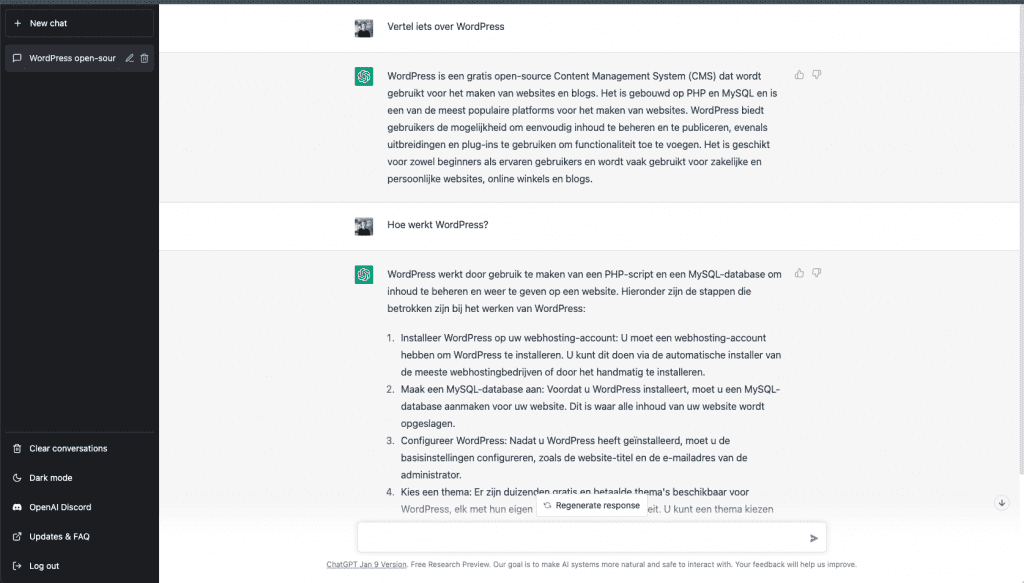
In ChatGPT you enter a specific request or prompt. For example: ‘Tell me more about artificial intelligence.’ The tool does not think for itself, it only gathers information. That is why you have to be clear and specific about what exactly you want to know and how best to ask for it.
Mistakes in the content
The copy ChatGPT generates is not free of errors. So always check whether there is anything wrong or odd in the content. If you are an expert in your field, you will spot the flaws quickly, but as a layperson you often do not know what is correct and what is not. And that makes it tricky. Because if you share incorrect information on your website, it can have negative consequences for the visitors to your site and for the reputation of your online domain.
Google can recognize AI and penalize you
Google penalizes AI-written content with lower rankings. Search engines have complex algorithms they use to determine whether a text is genuine or unnatural. They look at things like unnatural word order or repeated sentences. These algorithms and detection methods will only keep evolving and get better and better at recognizing artificial content.
The conclusion about ChatGPT
ChatGPT can be a useful aid for your website, but it does not hand you ready-made, SEO-optimized copy just yet. Do you need some extra help with that? Give us a call and we will get to work for you.
We write SEO-proof copy for your website
Rather hand it off? See how we help with SEO and findability in Google and AI.
More articles
- Setting up a website: how to prepare properly 21 February 2023
- 7 benefits of a WooCommerce online store 23 March 2023
- 5 tips for generating leads on your website 19 July 2023