

Defining your target audience is the foundation of your business. Because who are your customers? What drives them? With a solid audience analysis you know how best to reach your target audience. That matters far beyond your website: it matters for the way you run your whole business. In this blog you will read how to define your target audience and carry out your marketing better and with more focus.
What is a target audience?
Your target audience is the group of people you aim at with your products or services. An interior retailer, for instance, can choose to focus on private customers furnishing their homes, or on small or large companies buying office furniture. Every audience has different requirements and needs that you have to respond to. You can see your target audience as your ideal customer. You set up your business and your website for that customer and make sure you strike the right chord. That is how you create a focused customer journey. The better your website is tuned to your target audience, the higher the percentage of visitors who convert. Which aspects matter for your target audience? They differ for B2C (business to customer) and B2B (business to business):
| B2C | B2B |
| Gender | Gender |
| Age | Age |
| Level of education | Level of education |
| Region | Region |
| Interests and behavior | Interests |
| Needs and pain points | Needs and pain points |
| Characteristics | Industry |
| Channels and social media | Company size |
| Conversion (which action they take regarding your product or service) | Decision level and job title |
| Company values and vision | |
| Conversion (which action they take regarding your product or service) |
Your target audience shows up throughout the way you run your business, not just on your website or social channels. Based on your mission, vision and USPs you look at which audience fits. It also works the other way around: define your audience first and then look at how your business vision connects to it.
Defining your target audience: how do you do it?
Keep these things in mind during your audience research:
• Be specific
However much you might want to, you cannot appeal to everyone. You end up firing buckshot, and the chance that you really reach anyone is small. Focus on one specific audience and your chance of success is much bigger.
• Draw clear boundaries around your audience
Split the market into recognizable groups. Think of men or women, older or younger people, families or singles, and so on. Do not narrow it down too far either. The audience does have to be big enough to earn back your investment.
• Carry out a customer analysis and market research
Who are your customers and how do you reach them? Build personas. These are imaginary people who stand for the ones you want to reach. Do desk research into your customers and talk to them. Ask questions such as what their pain points are and where the resistance sits in the decision to buy. Also measure online what your audience does and draw conclusions from it, for example through Google Analytics. Your audience can be found on your website, but also on social media, for instance: which channels do they use?
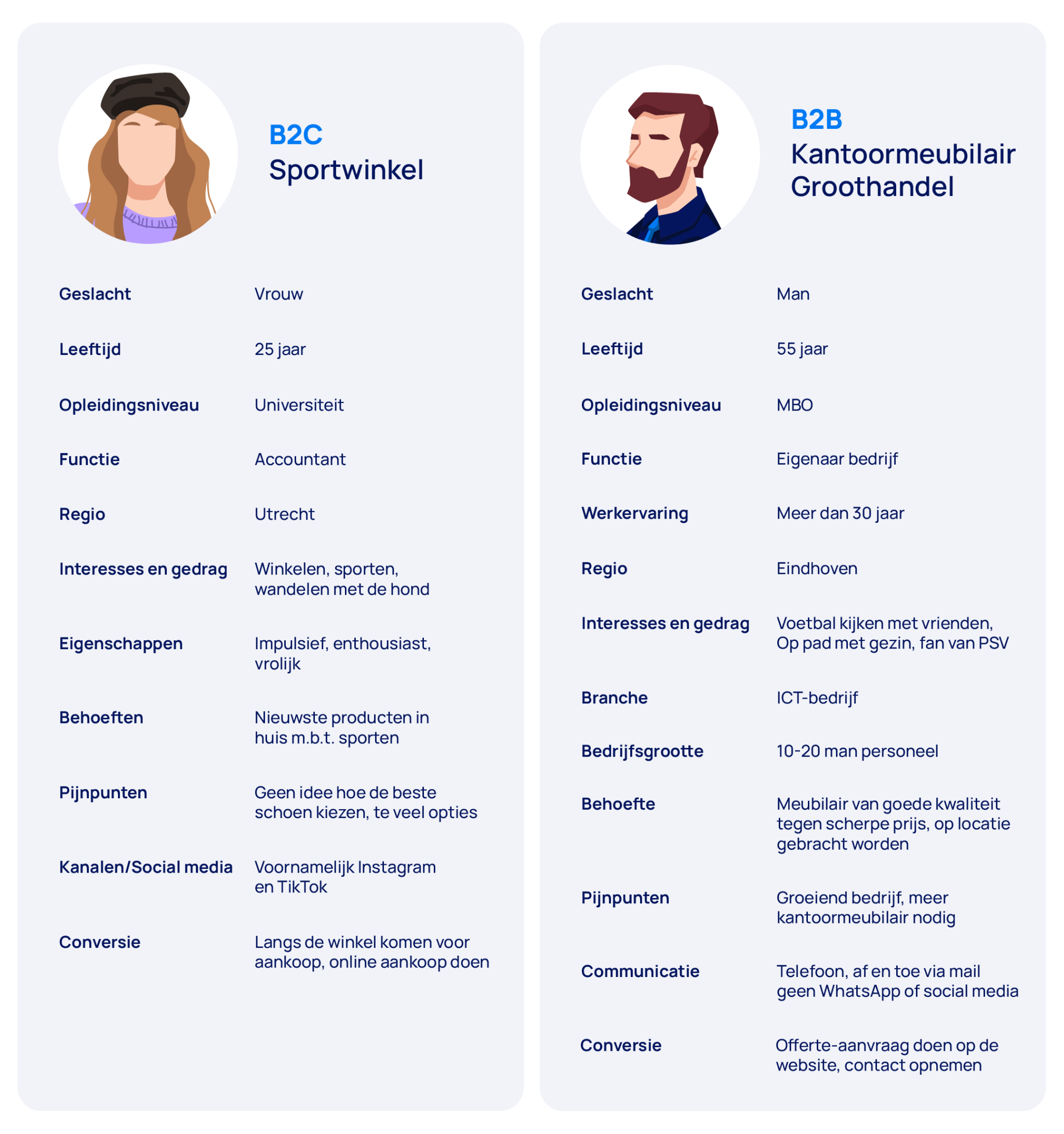
Your target audience is never entirely ‘finished’. Things develop continuously: in your company, in your industry and within your audience. Always stay well informed and sharpen your audience definition when needed, for example every year when you evaluate your marketing strategy.
How do we help you define your target audience?
When we set up your website or webshop, your target audience comes first. We sit down with you and ask sharp questions to define your audience clearly: who do you want to reach? We then set up your website for them as well as possible, for example using personas. We get to work on design, development and marketing for your website.
I want to get started on defining the target audience for my company and website.
Let’s get started!
Rather hand it off? See how we help with market and customer research and a digital strategy.
More articles
- Local SEO tips: how to improve your local findability 2 December 2024
- SEO trends for 2025: what you need to know 30 October 2024
- How and why to apply an employer branding strategy to your website 17 July 2024